


I still remember the look on his face when I’d said, “Alright, give it a shot.”
With a snowboard strapped to his feet for the first time, this middle-aged father of two glanced at 16-year-old me, then at the slope in front of us. After a calculated pause, he looked me straight in the eye and uttered a defiant, “No.”
Um... what now?
I’d been working as a ski and snowboard instructor at the local hill near my house in Massachusetts. My boss had apparently seen something in me because I got assigned to teach adults, even though I was in high school at the time.
One of my first clients had been a dad who’d wanted to learn to snowboard as a way to connect with his son and daughter; both of whom had started taking lessons the year prior. Dad wanted to fast-track his learning so he could catch up with them. Over the next 12 years of teaching, I’d come to understand that skipping steps never works. But on that particular day, I’d thought I’d score some points with him by brushing past the basics and making up for it later in our lesson.
After very shakily taking the rope-tow about half-way up the ski slope, I’d had him strap into his snowboard and began to explain the mechanics of turning. That’s when he’d told me point-blank he was not interested in continuing.
“I’ll fall. I’ll get hurt... I can’t be hurt, I have to work. Who would drive the kids to school? No way, I’m NOT doing that.”
Shit.
15 years later, I’d been flying to speak at a conference when that memory came to mind. With my laptop open in front of me on the plane, I remember exhaling, grimacing, and shaking my head all at once. I hadn’t quite been able to comprehend what was on the slides I was preparing to present. They were bad and I was embarrassed.
The realization had been swift: in order to move myself up in the corporate world, I’d managed to erase my entire personality. Poof… gone.
It’d been my fault; that much had been clear. I remember feeling angry and upset. Then, just... sad. I’d tried to recall when exactly it’d happened, but couldn’t place anything specific. Without warning, my style had apparently just evaporated, and I’d never noticed. The words on the screen sounded stale. Boring. Dry, like a plain bagel from the discounted, day-old’s pile you’d find by the register.
After all those years as a snowboard instructor, guide, and writer, I’d learned first-hand that stories—not explanations—are what help people navigate fear and uncertainty. Yet, sitting on that plane and reviewing the notes for my presentation, I’d felt about as stupid as I had at 16 with that snowboarding client.
Trying to rationalize the deterioration of my… my joie de vivre, it dawned on me that I’d fallen into the trap of throttling my potential in the name of safety.
Again.
Years ago during a mountain-guiding clinic in Jackson Hole, I’d learned that lesson in a way I’d thought I’d never forget. Maybe I just hadn’t recognized it in its business casual, corporate-friendly attire. Thinking back, it’d happened during a training day. When our group got to a more technical section of the backcountry route, we’d gone one-by-one down to the next safety point. As I descended, I’d been focused on riding safely… rigid, uniform.
With the rest of us watching, the last person to ski down had taken a different approach… And they’d ski’d the shit out of that line. Truly, it’d looked fantastic. It seems obvious now when I think about it, but it’s because they were having fun. Our guide had even leaned over to say, “there are people who ski and there are skiers—now that’s a skier.”
I hate to admit it, but I remember being big-time jealous.
It hadn’t occurred to me whatsoever to kick up the throttle of my riding. In my head, we’d been in guide-mode; I’d thought that meant reserved and calculated. I hadn’t ridden the line the way I’d wanted—I’d ridden it the way I’d thought was expected.
And that’d made all the difference.
Sitting on that plane a couple years ago, looking at the presentation I was set to give, it’s like I’d completely forgotten that lesson. Not only was there no “me” in there, there was no fun, either… nothing for people to grab hold of. Just facts, statements, and data points.
Yuck.
Explaining things seems logical. In fact, it’s a super helpful way to organize your thoughts; but that’s why it really only sounds good to the person doing the talking. It might feel good to neatly corral what you think, but listeners need a way to picture what you’re saying. And I was apparently very out of practice, despite how often I was speaking. In watering myself down to try to fit in better at work, I’d fully clogged up my creativity.
That realization on the plane is what led me to start my newsletter two years ago. I’d hoped it would help me find my voice again by forcing me to write regularly. The only thing to do, I’d reasoned, was to get to it—open the valve and start flushing out the gunk. So that’s what I’ve been trying to do for a couple of years now. A year and a half ago, I told my first story at The Moth. Then, about a year ago, I took a swing and published a personal essay instead of my usual newsletter. The response was incredibly positive, so I kept doing it. Then, three months ago, I challenged myself to launch an email series where I write a new story every day. Completely by accident, I’d say that’s been the thing that’s forced me to reckon with myself more than anything else.
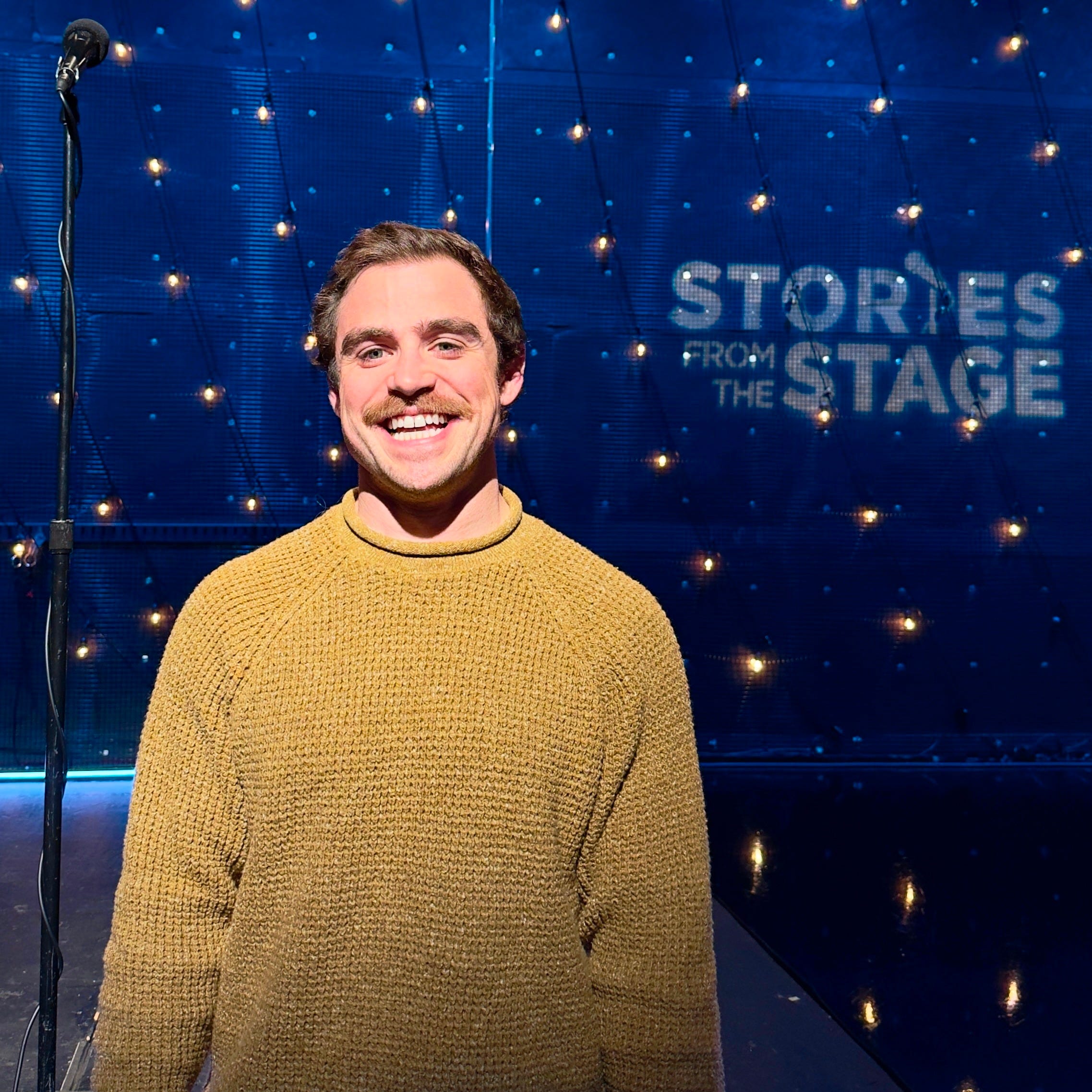
And, after all of that, this week I found myself sitting in the greenroom of a television studio in Boston. I’d been invited to share my story on national TV.
When you realize you’ve been throttling your potential because it’s made you feel safe, it’s important to ask yourself why. It’s even more important that you do it again if you lie to yourself the first time; which is something I’ve had to do quite a few times now. Only then can you start sharing a story all your own—one that really feels like you.
This week, I got the chance to try my hand at doing just that. Without taking all those steps to find my voice, I’m sure I’d have felt terrified when the producers reached out—and again once I stood in the studio and saw what was in front of me. Kinda like that snowboarding dad from when I was 16, but I wasn’t terrified. No, I was excited.
Reviewing my notes before the show, I’d thought about that plane ride where I’d discovered the loss of my voice, and then I felt myself smile.
The words on the page felt like the ones in my head. I didn’t sense myself reaching for any I’d thought might be expected of me. So when I went out on that stage, standing in those bright lights in front of that studio audience, I shared a story that felt totally and unequivocally like me. And I… um… I’ll be working on wrapping my head around that for a good, long while.
Check out my episode of Stories From The Stage.
onward.



If you enjoyed reading and want more of this kind of thing, I write short reflections like it each day as part of my daily column.
Sign up to get it here.
Yay you! Onward and upward.🙏🏾🌺 p.s. Did the dad ever snowboard with his kids?👀
Derek, you are simply amazing!!
Congratulations 🎉