

Please Make Time For Keith And Charlie
On looking for meaning and those who find it.

When I was a kid, we lived in the suburbs of Boston and I dreamed of one day living a life of adventure far, far away from where I grew up. Gigantic mountain-scapes, international travel, exhilarating experiences—I wanted all of it.
For years I felt like I was surrounded by people who didn’t want the same kind of life that I did, though. Folks in my hometown seemed to spend each day commuting to an office job in rush-hour traffic only to then hustle home and hurry off to [insert kid’s extra curricular sport or activity here]. Mornings were a mad-dash-frenzy of trying to catch the bus to go do it all again. Weekends were for yard work and living out blue-collar fantasies through home-improvement projects.
Everyone seemed happy to keep repeating the cycle.
I didn’t get it.
Even more confusing was how much meaning it seemed like they found in all that stuff. Picturing the adult version of myself living a life like that made me… apprehensive. Was it supposed to make me happy? If everyone around me was so content to move through their days and weeks like that, was I supposed to be as well? It didn’t really seem like I’d ever be able to.
Eventually, I broke.
We search for meaning like it’s a place on a map.
In maybe the least graceful way possible, I bumbled toward the life of adventure I’d secretly been longing for.
In my twenties, I found my way into the world of big mountain snowboarding, backcountry trip-leading, and outdoor marketing, where I became surrounded by a community of people who appeared to be chasing meaning in the same ways that I was. From what I could see, those folks weren’t going through the motions quite like my hometown crowd had been while I was growing up.
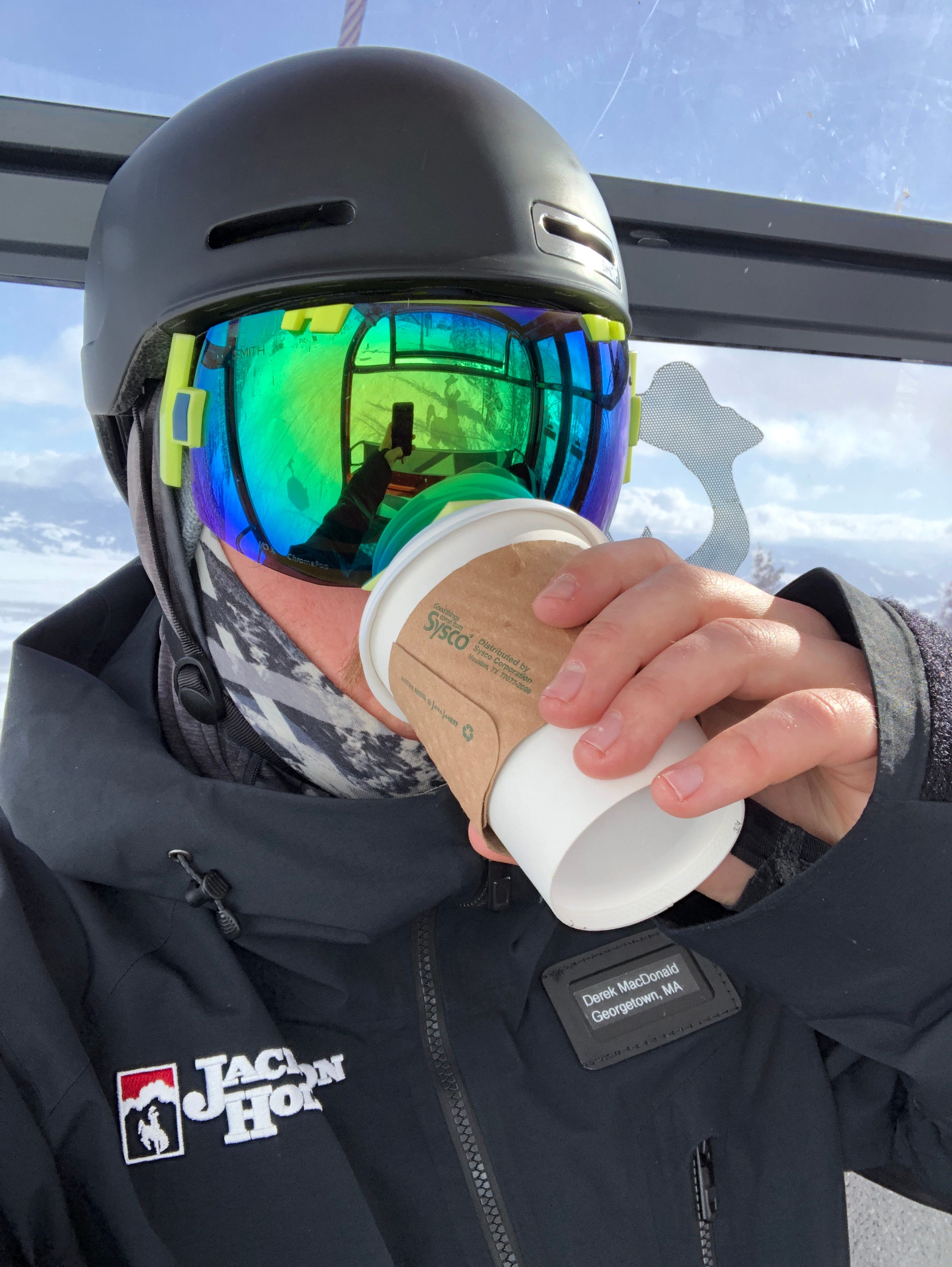
At the same time, it also wasn’t like those mountain-town folks were living lives completely void of monotony, either. There was still plenty of having to do stuff you didn’t love—plenty of “shoveling shit”—to cover the cost of leading a meaningful life of adventure. When it started feeling like I couldn’t harness the kind of happiness and meaning everyone else seemed to find, though, I became dismayed and apprehensive all over again.
That actually really sucked.
I thought I must be doing something wrong, because it certainly felt like I’d been working my ass off but still coming up short. And it took me years to figure out why.
One day, the glass just… shattered.
This past week, I was traveling for a conference.
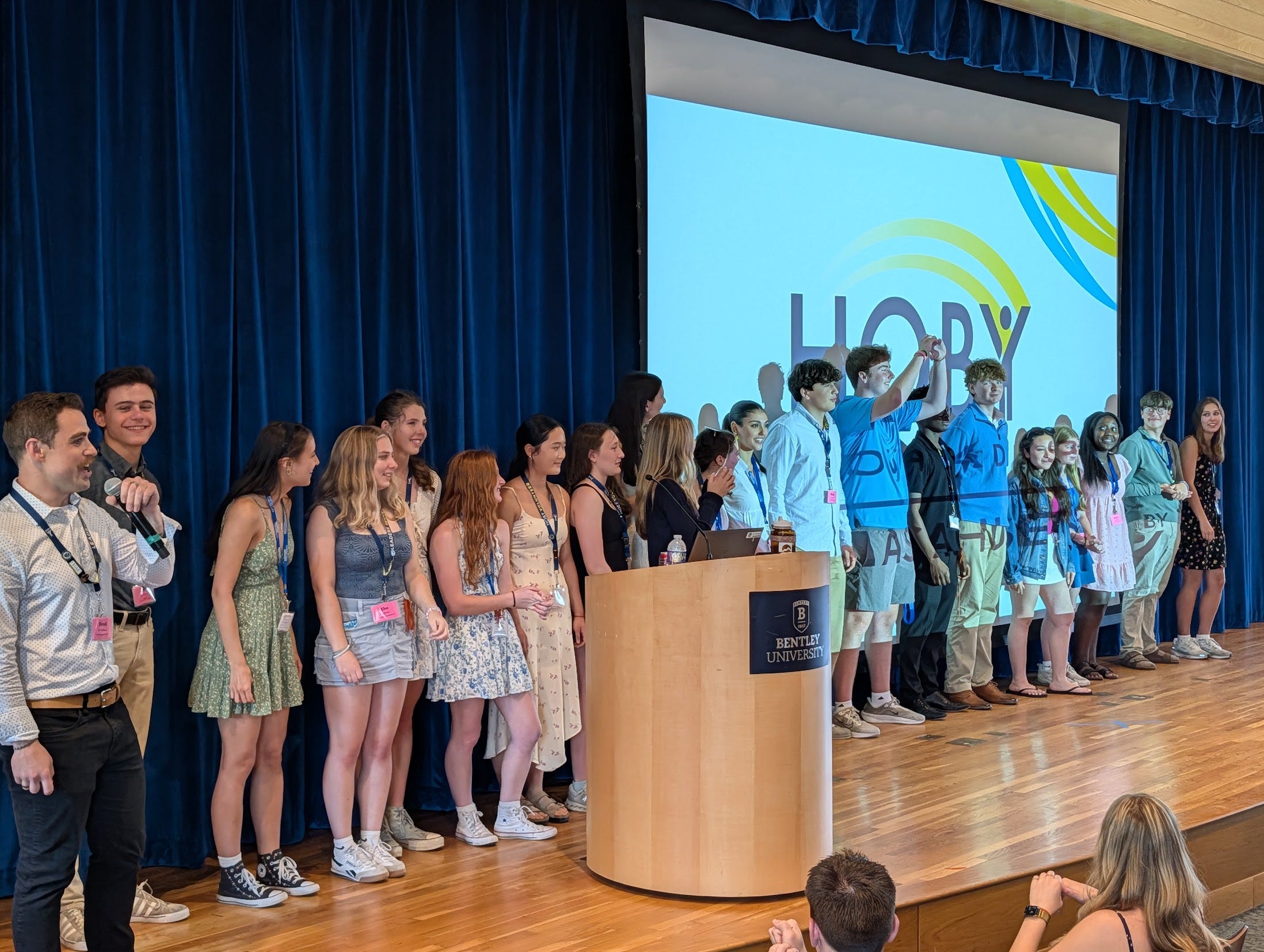
Right as I was about to begin my closing keynote, I wound up standing on the stage like a deer in the headlights. This was for a global nonprofit that helps high school students become effective and ethical leaders, and I’ve actually been volunteering with them in various roles since 2010.
Well, just before I went on stage, my friend (and fellow volunteer) teared up while introducing me as this year’s volunteer of the year. And, I mean, when a group of people you’ve looked up to for 16 years recognizes you with the most prestigious award they can bestow, what do you even say?
So, with my feet planted there on the stage, I just looked up and smiled at all of the eyes staring back at me for a minute. And that’s when this whole “chasing meaning” thing really seemed to click.
The bait-and-switch.
There’s a phrase that gets thrown around in 12-step programs about how those who keep showing up to meetings—and helping others do the same—are the ones who end up staying sober. It goes: “meeting-makers make it.” That’s something I didn’t really get when I first started going. Now, I’ll be the first to admit that I don’t know all the answers, and that I’m constantly learning more about stuff I thought I already knew, but I think I’ve come to understand that particular idiom more fully these days.
In fact, life beyond the meetings is what helped unlock things for me.
I started going because I wanted to get sober and stay sober. Full stop. The incentive for becoming a “meeting maker who makes it” is thinly-veiled, and that’s ok by me. It’s a game of do “this” if you want “that.” In this 12-step example, the cost is the time and effort spent consistently attending meetings, and the benefit (in theory) is sustained sobriety.
So, while standing on that stage with the silence dragging on and on, I realized I’d been using that same cost-benefit approach to try and find meaning for most of my life. But, in that moment, still frozen with hundreds of eyeballs looking my way, it dawned on me that showing up on its own was never enough… just like how making it to the 12-step meetings is a trojan horse for building connection with others. I’ve been showing up year after year to volunteer with this organization without ever thinking about any sort of cost-benefit tradeoff. There was no calculation of what I might expect in return. In this area of my life, I always kept going because being of service felt… good.
Standing up there, holding the mic, I almost broke down before I could even get a word out. I’d finally realized that, for 16 years, I’d been helping others to learn and grow—to try and fail—and that what I’d been feeling the whole time was a sense of… meaning.
As I’m wrestling with this realization that I’ve accidentally found the meaning I’ve long been searching for, I’m very much trying to pull myself together so I can start the keynote I prepared about the importance of showing up.
Showing up is only half of it.
I learned just how important it is to show up for people in elementary school, during my first (and only) season on a swim team.
Our coach had been new that season, too, and she was, um, rather uninvested. I was a good swimmer, which is sort of why I signed up in the first place, but I didn’t know a damn thing about swim meets. So on the day of our first one, I immediately felt nervous when coach no-showed. Another coach from a different age group was supposedly going to pull double-duty to cover both their team and ours.
Um, ok.
The air around the pool area was heavier than usual and the place was overcrowded with parents and kids. I didn’t know anyone except this one other person on my team who I’d sort of become almost-friends with and, suddenly, people were lining up in front of certain lanes, pushing past me, and squeezing between each other. I had no idea where they were going or what they were doing, so I was completely caught off guard when not-my-coach started steering me toward the water and said “ok, you’re up.”
I’m up?
What??
I just remember trying to figure out what was happening, asking questions without getting any answers, until suddenly there’s a countdown and people are hushing and THEY’RE OFF. Not me, though. Apparently I was part of a relay? Are we sharing lanes? Which side do I swim on? How many laps? What stroke?
When I hit the water I knew something was wrong. There was simply not enough motion happening around me—where was everyone? I’m on the verge of tears by then, feeling completely humiliated, as I just-keep-swimming the wrong stroke, by myself, in front of the whole fucking overcrowded place.
My mom was the one who, only just recently, pointed out to me exactly what was missing at that swim meet. And it really underscores the reason why showing up matters so much to me.
“Nobody told you the format.”
She’s so right.
The role of presence.
FINALLY, I raise the mic and make a small joke about getting emotional and fighting to keep it together. Then I say my name and where I’m from.
And now we’re rolling.
Yeeeesh.
As I’m explaining the parts of my background that have taught me the most, I’m becoming more and more certain that helping people connect with a sense of purpose is the very thing that gives me one. So it’s not lost on me that absences like that one from the swim meet are why I’ve spent so much of my life trying to chase after meaning. I always thought if I could crack the code, I could help other people to do the same. Unfortunately, that desire also led me to sprint ahead at times, often solo, which is um… ironic, to say the least.
That’s something I think I used to overlook. Only now do I realize that all I had to do was pay closer attention instead of spending so much of my time trying to get ahead.
It’s the small moments after all.
In the keynote I gave, I tried my best to stress the importance of showing up—that willpower is a scam, that some is better than none, and that small steps are what lead to big adventures. I wish I’d talked more about being present once you show up, but it wasn’t until a few days after getting home from the conference that I came to that realization.
I’d been sitting at a hightop table toward the back of a local coffee shop, with only about an hour or so before they’d close. I biked over because I thought for sure they’d have AC. Only after getting there did I learn that they didn’t. Instead, the doors are propped open, which was just definitely not helping anything at all. The thing that was most surprising, though, is the guy playing an electric guitar on a bench near the register. He was plugged into a personal amp and everything. While I’m watching him, I’m mostly trying not to think about how my shirt is still papier-mâchéd to my shoulders from that hot-as-hell bike ride. I’ve got my headphones on but I’m not listening to anything and, suddenly, I’m aware that I’m the only person left in the whole place. There’d been a decent mix of people—how did I not notice the families with the young kids slip out? Or the other folks on their laptops, like me? Even the gaggle of forty-somethings who seemed like weekend regulars had packed up.
It’s just me and guitar guy—and I’m realizing he probably thinks he’s playing for no one since I’m wearing headphones and looking at my computer.
So I take the headphones off and shut my laptop. Guitar guy’s notes start to drift, and it seems like he’s lulling to a stop. Sure enough, he bends over to snag his mug and I’m able to see the tired lines of his face draped above sunken cheeks. I start clapping sort of gently, but also firmly enough to let him know I’m enjoying his music. He looks up, and his entire face rebounds.
We share a smile, and he launches into “Street Fighting Man” by The Rolling Stones.
In an instant, I’m transported back to the house I grew up in, in the town I’d wanted to get so far, far away from. These days, though, I’m no longer so confused by the happiness of the people who lived there or the meaning they found in life’s small, everyday moments.
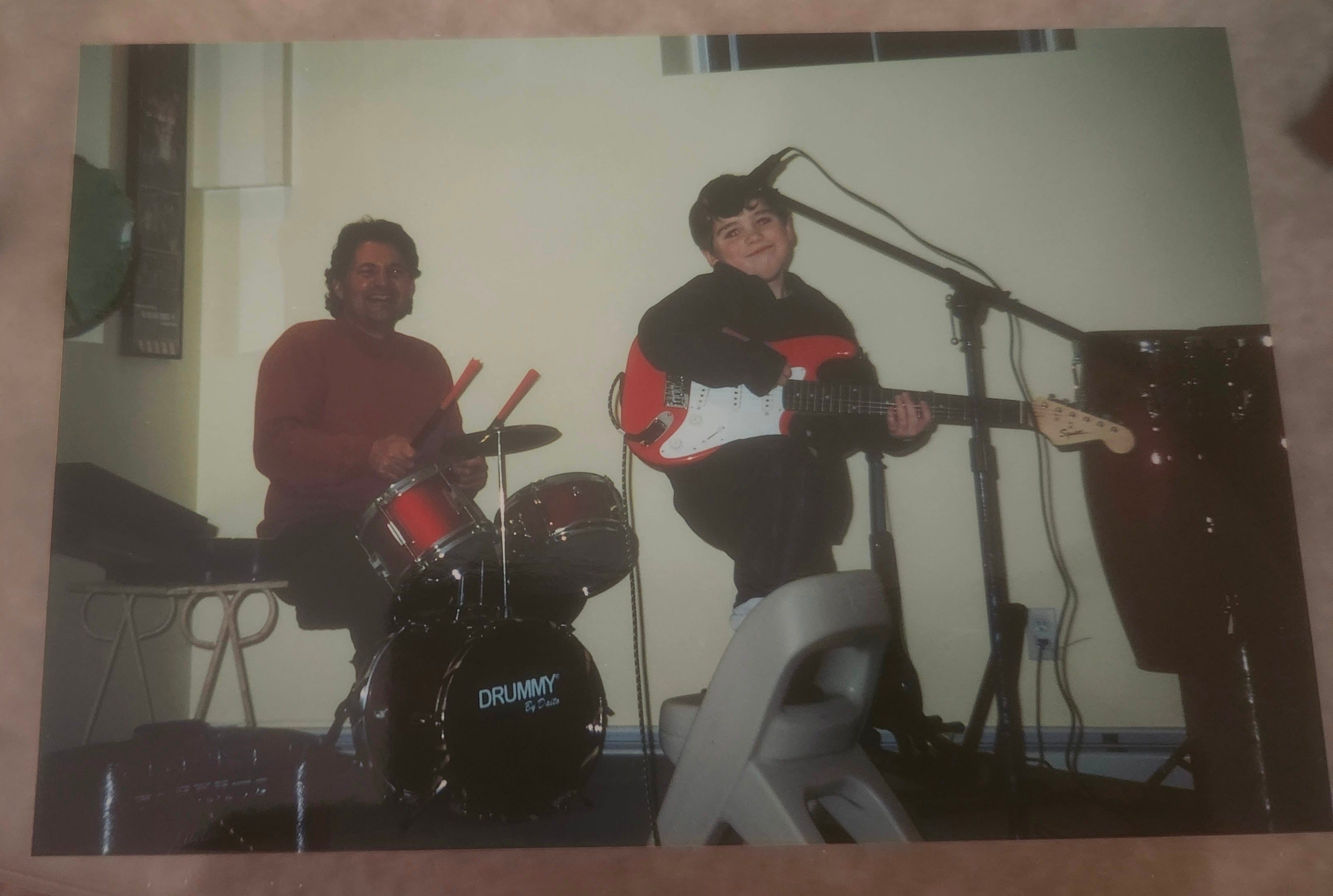
Back then, I wanted to be a musician and an actor.
So much so, that my grandfather built a wooden platform in the corner of our basement to serve as a stage where I could practice guitar and pretend I was Keith Richards. My mom’s boyfriend at the time, Mike, always made the time to be my Charlie Watts.
onward.

If you enjoy reading my writing, I publish short reflections like this each day as part of my daily column, Kickturn.
Sign up to get it here.