

The Kind Of Men Who Stand Up First
How people respond tells you a lot about what they’ve been through.

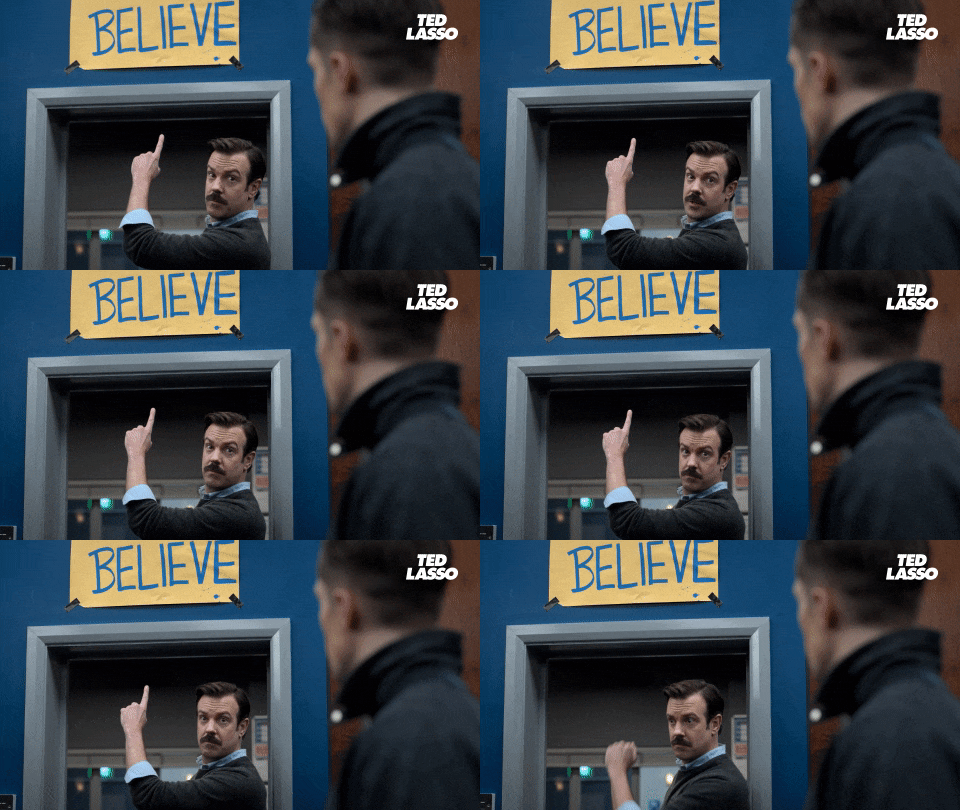
I’m rewatching the Ted Lasso series right now, and it got me thinking about recognition and response in a way I hadn’t expected.
Last night, I tossed on an episode without realizing which one it was. When it got to a hostile locker-room scene after a particularly bad game, though, I felt my body stiffen. I’d known it would. So I took a deep breath and forced my shoulders to relax. The camera panned across an entire team’s worth of uncomfortable faces while they watched an inebriated dad joyfully manipulate his adult son’s emotions. But that pano shot of the team was an intentional camera angle for the viewers—I wanted to see how the actors portraying the players responded when the camera was on dad and son instead of them.
That’s how I noticed the one player who recognized the aggressive tension immediately and stood up before anything even started to escalate.
I rewound.
He’d been sitting alert, facing the dad and son, his teammate, while they started talking. All of the other players had still been going about their business. I’d been very impressed with the director for including that. That same player, the one who’d stood up first, even moved to jump in when things got violent. Only someone who’d been through something like that before could’ve anticipated what’d been about to happen when the dad first walked through the door. He knew. While the other players reacted with dumbfounded expressions when the punch was thrown, that player was already responding; moving toward the situation instead of shying away from it.
That’s when I reminded myself to breathe.
It’s usually the son in that scene that gets to me, but this time I’d choked up for an entirely different reason.
Some people learn to detect danger earlier than others, but what they do with that skill varies. For some, they learn to respond by protecting themselves while others learn to protect those around them.
Unfortunately, I’ve lived through a lot of scenes like that father-son fight from Ted Lasso. Sometimes I’ve been the son, and sometimes I’ve been his teammate who stood up first. Once upon a time, I was even one of the dumbfounded guys in the back. I’m sure that’s why so much of how I respond to conflict is rooted in self-preservation—recognizing something that’s not working and making myself capable of withstanding its ripple effects.
When I was in elementary school, I started filtering the kind of details I shared about myself in class. Like, if I’d gone fishing with my dad over the weekend, I might talk about the best ways of organizing a tackle box, but I’d leave out the parts about why it’d been so important to get it right.
In college, while out at a dive bar, I’d casually yanked a group of friends up against the wall with me a good 30 seconds before a fight broke out next to where they’d been standing. “How did you know that was going to happen??” they’d asked. “I could just tell” I’d told them, leaving out any mention of the times where I’d been the guy who got hit in the face. Truth be told, plenty of those were my fault. Some even happened just like in Ted Lasso, with someone egging the other person on.
Something I’m always working on is recognizing the full picture of what’s happening and choosing how I want to respond.
Take this morning for instance—as I walked into the kitchen to make coffee, I spotted my neighbor in their driveway.
It was early, but not as early as usual. Cold but not frigid, you know? The light popped when I opened the blinds, revealing a bright but not sunny day.
Usually, right about then is when my neighbor Jason wheels his bike from the gate to the sidewalk—yes, even in snow and blizzard conditions—but this morning something was different. I heard no click-click-click from the wheels. I saw no helmet or reflector vest. Not to mention, he was coming up his driveway on foot instead of leaving it on a bike.
huh...
I kept watching with confusion.
Oh, right... coffee.
In addition to a black winter jacket, a wool hat, and thick gloves, Jason wore a smile, like he usually does, while casually pushing an electric snowblower in front of him. Maybe he was moving it? He’d cleared his driveway last night, of that much I’d been certain. I was there. So, I turned and squinted against the light shining through the windows and looked past Jason to where he’d been coming from.
That’s when it’d dawned on me: he’d just done the neighbors driveway across the street. He must’ve—that’s got to be it. Probably because they’re older and he’d noticed they hadn’t gotten to it yet. I’d been completely speculating, but it’d be a very Jason thing to do. A few minutes later, I did see a reflector vest and bike tire round the corner, and I smiled, taking a satisfied sip of coffee.
I really like where I live.
I really like my neighbors, and I really like the community, too. Because it’d have been just as easy for him to continue on with his day without helping out the people across the street with their driveway. And even though I’m new to the neighborhood, it’s so clear to me that he wouldn’t do that. I’m not sure what he’s been through that makes him want to build up his community, but it was a small reminder that recognition and response can turn self-preservation into contribution. Or even full-blown community. Especially for those of us who grew up using it to find danger and hide from it.
It’s taken a lot of work to get myself into a position where living in a place like this is possible. And now that I’m here, I really want to be like Jason.
From what I can tell, the men who stand up first are usually those who can spot a problem before there is one. And by then, they’ve already got a full enough picture to respond accordingly.
onward.

If you enjoy reading my writing, I publish short reflections like this each day as part of my daily column, Kickturn.
Sign up to get it here.
Great article, Derek. I can relate to reading the room and sensing the emotional storm as it arrives. Not necessarily from a childhood like you describe, but from a marriage that was equally violent. What I envy about men, is their strength and, what I see as the ability to stand up like that. At best, I’m able to remove myself. I wonder if I would be brave enough to physically intervene like that player in the locker room . Food for thought. Thanks for your vulnerability and sharing your story. It’s beautiful.