


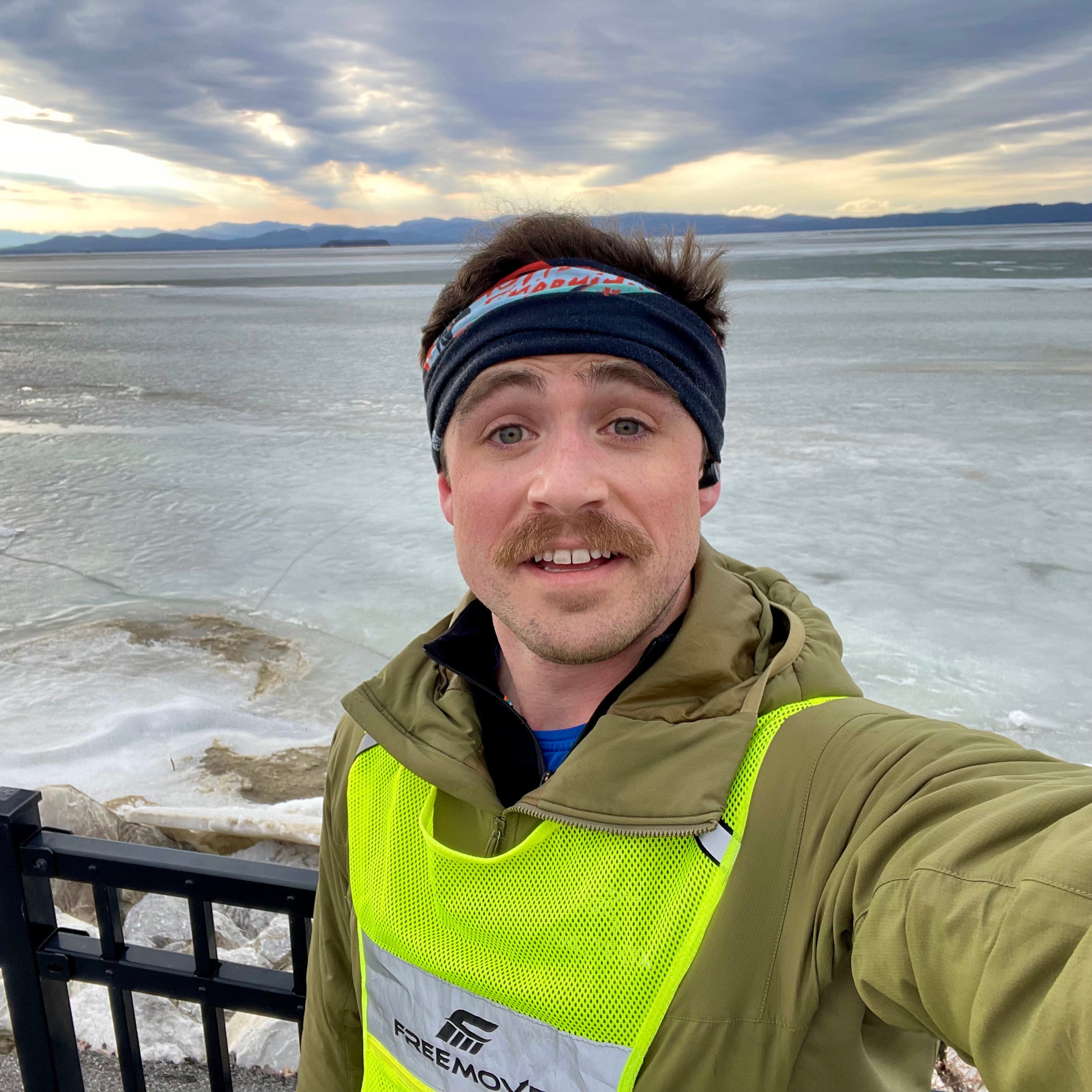
For the past few years, I’ve dreamt of finally getting back in shape. Winning the never ending game of tug-of-war by visualizing the type of person who can do it and just… willing myself to do what they’d do.
“Fake it till you make it” they say.
“What does that even mean??” I say back, before just making stuff up and hoping for the best.
I fantasized of wrestling work-life balance into submission, getting enough sleep, and waking up motivated to exercise. I visualized healthy eating habits that felt easy again and tried to figure out how to be someone who looked forward to doing fun things with their partner—rather than watching another movie on the couch.
The want was there, I just couldn’t find my way to the actions that would actually make those things, ya know, real.
Yet, I like to think of myself as a pretty resilient guy.
Willpower is a scam we try to sell each other.
Willpower is the modern snake oil that promises to make all your insecurities disappear. Recently, I managed to start running again. But I don’t think willpower had anything to do with it.
I finally put on the running shoes I laid out over two weeks ago. If they hadn’t already been there, I probably wouldn’t have gone looking for them. It was 6pm, which is right around the time I usually go for a post-work walk. Outside, it was gray again; cold and drizzling. Stepping out into the rain, I took a deep breath in through my nose. At the end of the block, I stretched for a bit and then I began to jog.
Having once been a very avid runner, something in me clearly still knows what I’m supposed to do, even if that part of me has been dormant for quite a while now.
At my two-mile marker, I came across two middle-aged women sitting on a bench along the path by the waterfront. Small waves lapped gently between the ice, rocks, and sand, up-and-down the shore. Rather than slowing down or turning around, I kept going. One of them was sobbing, and it seemed kinder to let them have their space without accidentally implying that their grief made me run in the other direction.
I tried not to look, focusing instead on my breathing, but I managed to see the unmistakable posture of someone trying to console another, very defeated looking person.
Maybe a layoff?
Divorce?
Death of a loved one?
My mind started guessing what might have brought them to the waterfront. After jogging past, I became aware of the guessing game I was playing and was both fascinated and disappointed with how quickly I’d constructed the possible scenarios. Then I thought about my own decision to go running along the lakeshore and felt my head shake as I processed a thought: whatever it is they’re going through, we’re really not so different.
It wasn’t willpower that brought me to the lake, it was… acceptance. I could finally admit it: I can’t fake my way into feeling better about myself.
But, I was actually willing to do something about it—even if it had just been something small, like putting my running shoes by the door a couple weeks back.
Fear fuels willpower, environment triggers action.
Getting back into running is one of the ways I’m trying to take better care of myself. It seems like the first step in my tug-of-war match with the kind of life I want.
Six years ago, I sat across from someone who’d agreed to grab a networking coffee with me. I’d been living in Jackson, Wyoming at the time. After years of trying to piece together a life I could sustain in that mountain town, I felt I’d reached a crossroads. I pictured what my life would look like in 5, 10, 15 years if I didn’t change a thing. I figured it would probably look the exact same as it did in that moment, despite my exhaustive efforts to try and get ahead instead of just scraping by.
The person sitting across from me worked in the same industry as me, but they were a lot further ahead in their career. They’d started out much like I had. So I’d asked them, pretty much word for word, “how the hell did you do it?” We were sitting at their office—a company which they owned—with an unobstructed view of the Tetons as the backdrop for our conversation. I’ll never forget it, because the first thing they asked me was if I loved the town... and when I said yes, they nodded knowingly, looked me in the eye, and told me to leave.
huh?
“Come back in ten years” they’d said.
And, some time after that conversation, I did end up leaving. At first, getting ahead was the plan so that I could return. It’s not anymore, but some of the ingredients are the same. My actual plan has been to sculpt a life with the highest possible agency by finding the most effective leverage. And for the last six years, that’s exactly what I’ve been doing. I went all in on sharpening my skills and moving my career forward to increase my earning potential.
Deprioritizing my health is the cost I’ve knowingly been paying.
And, recently, I finally became ready to change that.
Instead of adding more willpower, remove what’s in the way.
For the last five years or so, I rationalized the idea of taking shortcuts with my health so that I could get ahead in my career. It sounds silly, but I reasoned the time saved each day seemed worth it. By not commuting to the gym and working out, or going to the grocery store and cooking healthy meals, I figured I could buy myself a few extra hours of working, learning, and doing.
The worst part is that it worked.
I say that even though I’ve spent the last couple years in and out of doctor’s offices dealing with health issues. So when it comes to overhauling things, my biggest goals are three-fold: better sleep, consistent exercise, healthier diet.
The real challenge, though, has been pursuing that without relying on willpower.
Right off the bat, I knew that meant cutting down on my caffeine consumption... but, you know, without eliminating it entirely. Between my current coffee intake, medications, and a persistent lack of sleep, it’s not all that hard to understand why my nervous system’s been red-lining for years; even after removing toxic environmental stressors and increasing my mental-health toolbox.
When it comes to exercise, I knew from my extensive training as a former athlete that my optimal mix looks something like high intensity workouts (popularized by CrossFit) 2x3 per week, and cardio (running or biking) on the days in between, with one or two days off out of seven.
Diet’s the biggie. Unfortunately, it’s become the most daunting of the three. So I’ve been starting with small, sustainable changes.
My goal here is to create an environment that prioritizes healthy habits, one step at a time, without having to fake it in order to make it. Right now, I’m focused on adoption (probably because I’m a marketing operations dork at heart). I just want to make it as easy as possible for me to do the things on that list. And I’m a firm believer in the wisdom of If You Give A Moose A Muffin.
Or, simply, the “if this, then that” ideology.
Since I walk at the same few times each day, using one of those time-slots to run doesn’t feel like such a big change after all. And if I put my running shoes by the door, then I’m much more likely to put them on and go do it. That’s how I’ve been thinking about this. For me, changes like these are about engineering the space to succeed rather than trying to will myself to master everything all at once.
That’s been looking like meal prepping, food shopping, walking, and getting up earlier in the mornings than I was.
Resilience isn’t willpower, it’s practice.
On my way home from running along the waterfront, I couldn’t stop thinking about all the times I’ve returned to this place—of all the times I’ve used this path by the water to put myself back together. Same jagged rocks along the shore, same beachy smell even though it’s a lake, same light gray cityscape above the path... wearing an aura of both sadness and joy.
I’d sat in almost the same exact spot as those women when I was a college student, having just learned of a friend’s overdose. Years later, I’d been running this same bike path along Lake Champlain almost daily to train for my first marathon. The race itself was in Portland, Maine, and after all that training, I showed up extremely hungover for it.
When I moved back to Vermont from Wyoming in 2021, this path along the water was one of the routes I used to get ready for the Boston Marathon, too. I was fresh off of a breakup at that point. Thankfully, I was also in the early days of getting sober, so I was not hungover for that one.
Running past the same women on the bench on my way home, I just mentally wished them well without inventing any backstories.
Make it as easy as possible to take the next step before you can talk yourself out of it.
If you want the first domino to hit the second (and then the third and so on), you have to set them up. Starting means placing the pieces for the chain-reaction.
It’s about small repetitions and making it as likely as possible that you’ll take the next step. Forget about willpowering your way to the “big thing.” Resilience is placing your running shoes in front of the door so you see them every day and have to step over them for two weeks—or however long it takes—before you finally put them on. Because, the key is that you did put them on, whenever that was.
Small actions that change broader behavior… that’s resilience.
It starts with intentionally adjusting your environment, plain and simple. We fail when we bank on willpower alone to solve our problems. Maybe instead of “fake it till you make it,” the answer is admitting we don’t have it figured out yet. Perhaps resilience is being willing to put your running shoes by the door.
Maybe finding your footing is just about rigging the odds in your favor instead.
onward.

If you enjoy reading my writing, I publish short reflections like this each day as part of my daily column, Kickturn.
Sign up to get it here.
I hit this realization about willpower a few years ago, but still haven't designed the right environment to boot out some bad habits with ones I want so I can build the life I want.
Though I am getting closer and closer. I'm hitting the gym again (FINALLY) next week by doing what I used to do -- schedule the time and when the alarm goes off, just go, put gym cloths on the morning to remove even that tiny friction. My version of the shoes by the door (and my gym shoes live by my front door too).
Not been drinking enough water, so I've got a 64 ounce pitcher, sit it on my kitchen counter, and make sure it's empty by the end of the day (my other 32 ounces come from my regular 2 mugs of tea in the morning).
Loved all of this, man. Especially the vignette of the women on the bench (and here's to hoping the consolation was for a minor, not major, life setback). One of my guilty pleasures is when you're driving on a residential street at night and you get a glimpse through a window at a couple on a couch, or family at a table, or what have you and then just make a story up.
May the odds be ever in our favor.